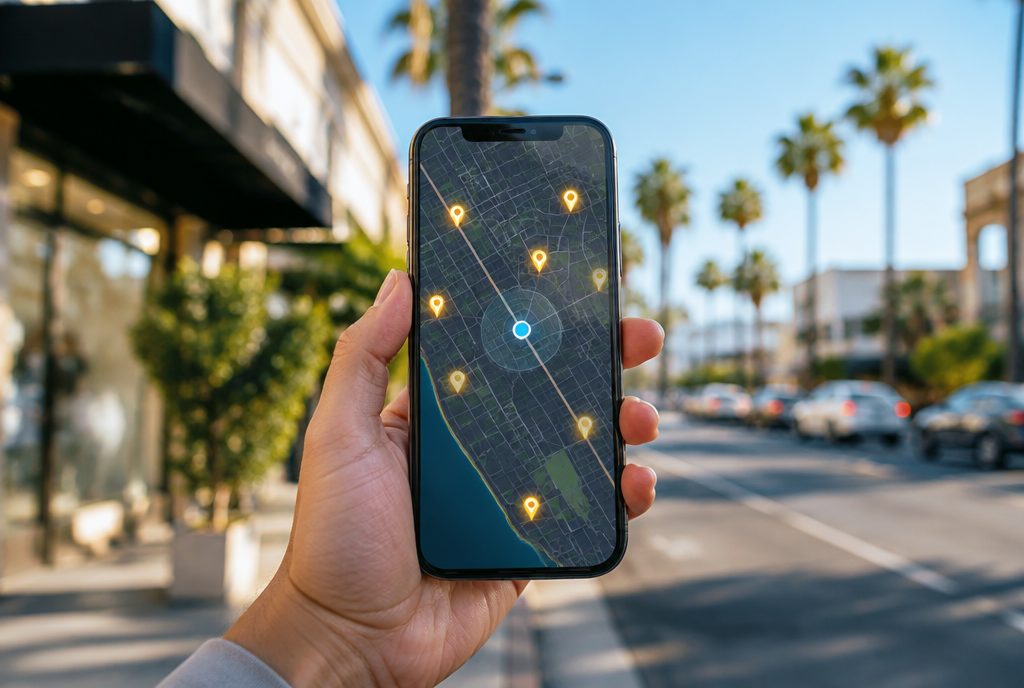
For many Los Angeles businesses, the three map listings at the top of Google bring in more calls than everything else combined. Getting into that “3-pack” is not luck. It comes down to a handful of signals you can improve, plus one you cannot control: where the searcher is standing.
- Google ranks local results on relevance, distance and prominence.
- Your Google Business Profile, reviews and website all feed those signals.
- In a dense city like LA, track visibility across your service area instead of checking a single ranking.
How the Google 3-pack works
Google says local results are based mainly on three things: relevance (how well your business matches the search), distance (how close you are to the searcher or the location in the query) and prominence (how well known and trusted your business is).
In Los Angeles, distance changes fast. A business in Culver City can rank well for searchers nearby and disappear for someone in Pasadena. That is why your “ranking” is really a map of visibility, not a single number.
Step 1: Make your Google Business Profile complete and accurate
- Choose the most accurate primary category, then add relevant secondary categories.
- Fill in services, products, attributes, hours and service areas.
- Upload real photos of your team, location and work, and keep adding new ones.
- Use your real business name. Adding keywords to your name breaks Google’s guidelines.
- Post updates and answer common questions.
Our Google Business Profile optimization service covers this in detail.
Step 2: Build a steady flow of genuine reviews
Reviews influence both rankings and whether people click. What matters is not just your star rating but how many reviews you have, how recent they are and what they say.
Ask every happy customer, make it easy with a direct link, and reply to every review professionally. Never buy reviews or offer incentives for positive ones, which violates platform rules.

Find out where you rank across LA
We map your Google Maps visibility across your service area and show you what is holding you back.
Get my free local review →Step 3: Strengthen your website’s local relevance
Google cross-checks your profile with your website. Make sure your site has a clear page for each main service, your name, address and phone number match your profile exactly, and important pages mention the areas you serve naturally.
If you serve several parts of LA, create useful location pages only where you have something genuine to say about that area.
Step 4: Earn local citations and links
Consistent listings on reputable directories, plus links and mentions from local organizations, publications and partners, help prove your business is real and prominent in the community.
Focus on quality. A mention from a respected local publication is worth far more than dozens of low-quality directory listings.
Step 5: Measure across your service area
Use geo-grid tracking to see your visibility at many points across your service area. It shows exactly where you win and where competitors are stronger, so you know which neighborhoods to focus on next.
If you are not showing up at all, talk to our Los Angeles local SEO team and we will diagnose your listing.
Frequently asked questions
Can I pay to be in the Google 3-pack?
Not organically. Google Local Services Ads and Maps ads appear separately and are labeled as ads. The organic 3-pack has to be earned.
Why do I rank in the 3-pack in some places but not others?
Distance from the searcher is a major factor. In a large city, your visibility naturally changes from one neighborhood to the next.
How long does it take to get into the 3-pack?
In less competitive categories, improvements can show within weeks. In competitive categories in dense areas, it often takes several months of steady work.
Do I need a physical address to rank in Google Maps?
Service-area businesses can rank without showing their address, but they still need a verified Google Business Profile.